
When you form an LLC or corporation in the US, the state asks for one piece of information that confuses almost every first-time founder: the registered agent. This guide explains what an agent does, why the law requires one, the real risks of getting it wrong and exactly how to change agents if yours isn't working out.
What does a registered agent do?
A registered agent (sometimes called a statutory agent or resident agent) is the official point of contact between your company and the state. Their main jobs are:
- Accepting service of process: if someone sues your company, the court papers are delivered to your agent.
- Receiving official state mail: annual report reminders, franchise tax notices and compliance letters.
- Forwarding everything promptly so you can act before deadlines pass.
Good agents scan and upload documents the same day and send reminders. That's exactly what non-resident owners need.
Legal requirements
Every state requires LLCs and corporations to keep a registered agent who:
- has a physical street address in the state where the company is formed or registered (a PO box isn't allowed);
- is available during normal business hours to accept documents in person;
- is either an individual resident of the state or a business authorised to act as an agent there.
If you live outside the US, or in a different state, you can't be your own agent for that state, so you appoint a commercial agent. Each state's Secretary of State explains its rules; for example, see Wyoming's Business Division or the Florida Division of Corporations (Sunbiz).
What happens without a registered agent?
- Default judgments: if you're sued and nobody receives the papers, the court can rule against you without hearing your side.
- Missed state deadlines: you never see the annual report reminder, so penalties start piling up.
- Loss of good standing and dissolution: states can administratively dissolve companies that don't keep an agent, which can freeze bank and payment accounts.
Registered agent vs business address
A registered agent address is for legal and state mail only. Many founders also want a separate business address for banks, customers and marketplaces, ideally with mail scanning. Our Registered Agent & Business Address service combines both so everything lands in one portal.
How much does a registered agent cost?
Commercial agents typically charge a yearly fee. Cheaper isn't always better: the agent is the only reason you'll hear about a lawsuit in time, so look for same-day scanning, deadline reminders and a portal you can actually use.
How to change your registered agent
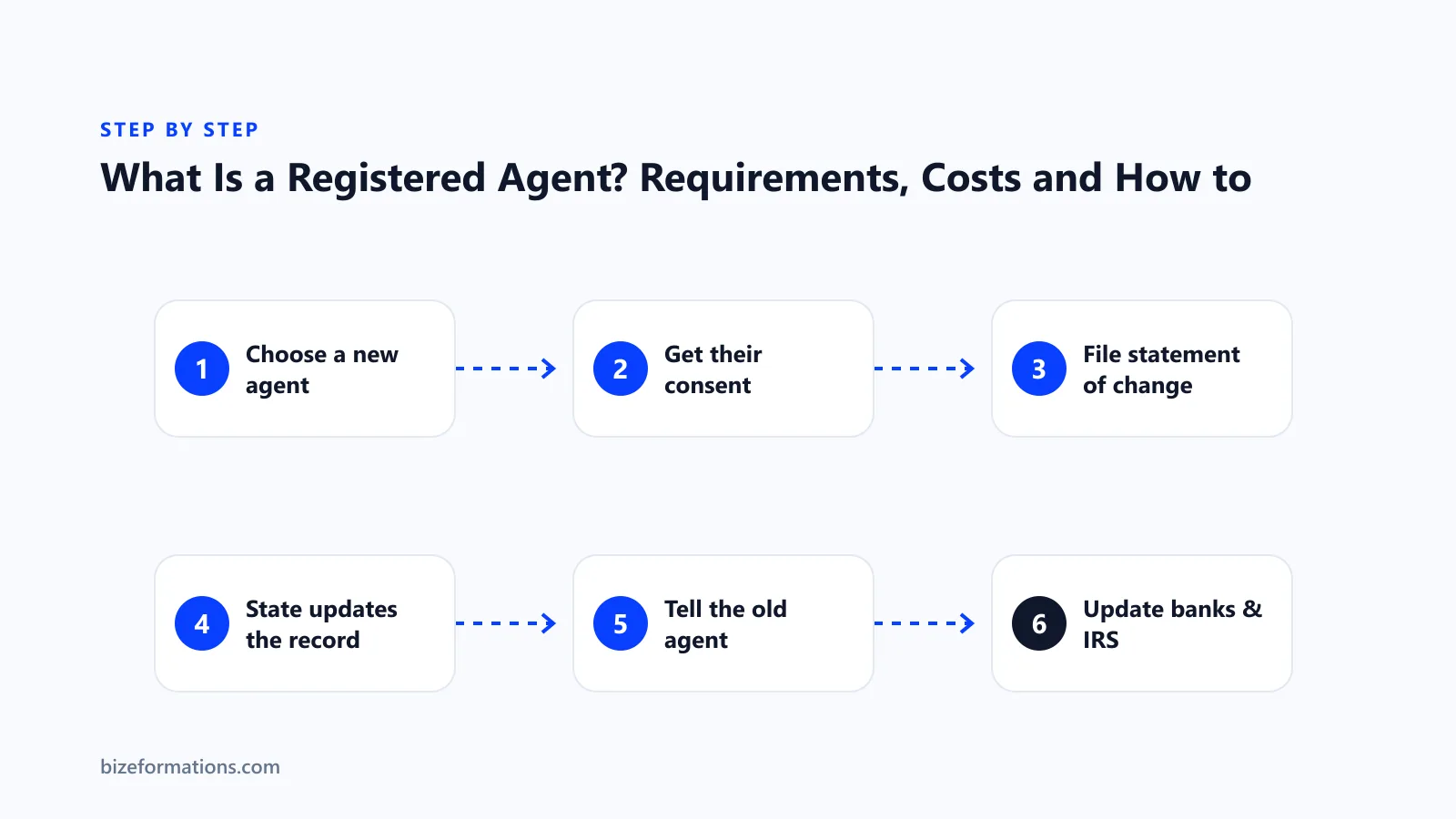
You can switch agents at any time. The process is similar in every state:
- Choose your new agent and confirm they serve your state.
- Get their consent: some states require the new agent to sign or consent to the appointment.
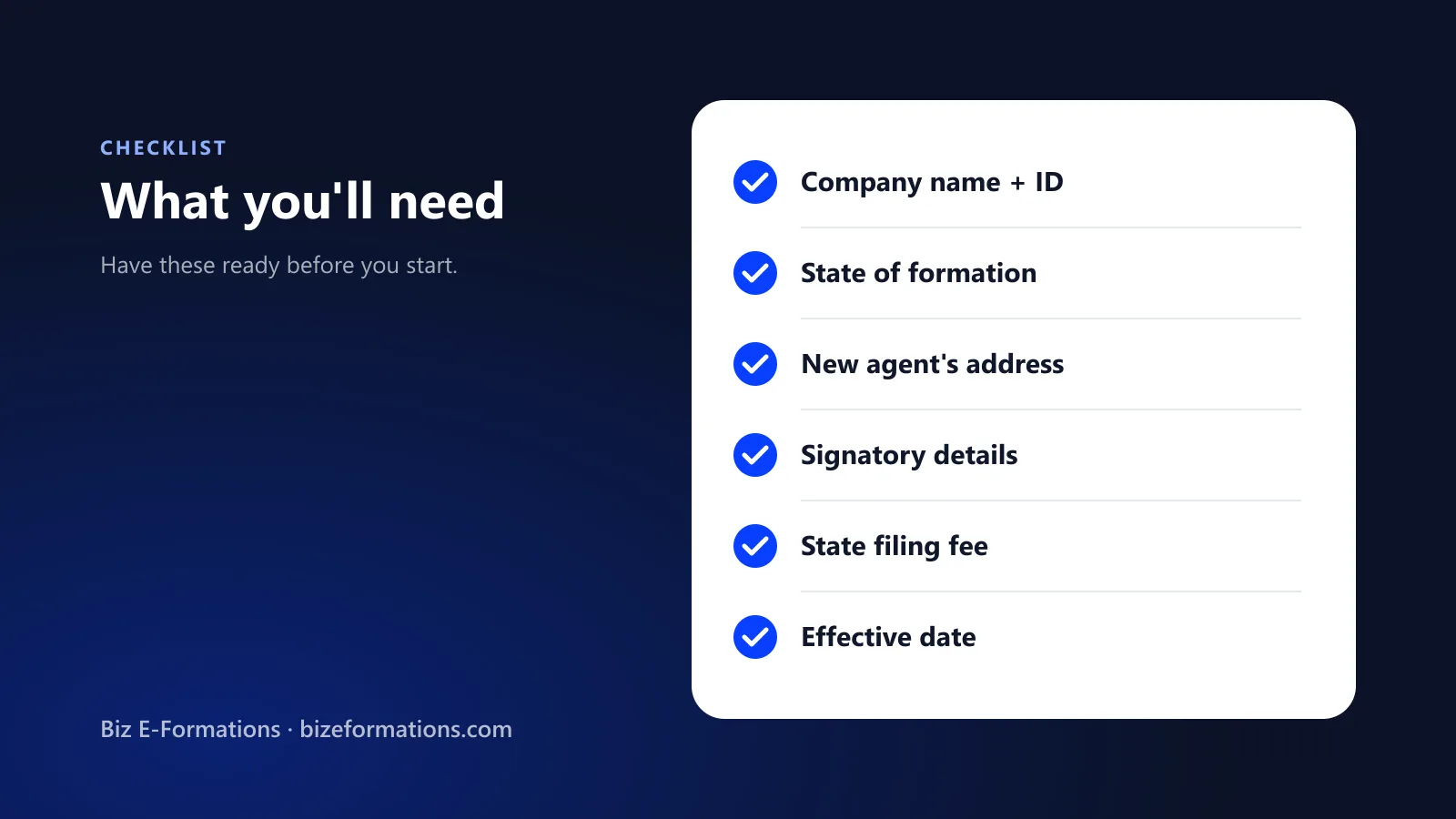
- File a change form with the state: usually called a "Statement of Change", "Change of Registered Agent" or an amendment, with a state fee that varies by state.
- Wait for approval: the state updates its public record, often within days.
- Tell your old agent and cancel the old service so you're not billed again.
- Update your records: banks, payment platforms and the IRS (if the agent's address was your mailing address).
Some states let you file the change together with your annual report, which saves a separate fee. Changing at renewal time is often the cheapest moment.
Choosing a good agent: checklist
- Covers your state (and any state where you're registered as a foreign entity).
- Same-day scanning and upload of service of process.
- Email or portal alerts with deadline reminders.
- Clear renewal pricing with no surprise extras.
- Helps with the change filing if you switch.
Switch to us in your state
We offer a registered agent in all 50 states, with a free US business address and mail scans. Choose New registered agent for a new company, or Change registered agent and we'll prepare and file the state change for you. If you're forming a new company, an agent is included in every US LLC package.
