
Value Added Tax (VAT) is charged on most goods and services sold in the UK. Registering at the right time keeps you out of penalties; registering voluntarily can make your business look established and let you reclaim VAT on costs. This guide covers when you must register, the special rules for overseas sellers and how the application works.
When you must register
A UK-established business must register when its taxable turnover (sales that aren't VAT-exempt) goes over £90,000 in any rolling 12-month period, or if you expect it to go over £90,000 in the next 30 days alone.
- If you've gone over in the last 12 months, you must register within 30 days of the end of the month in which you exceeded it.
- If you expect to exceed it in the next 30 days, register by the end of that 30-day period.
The threshold and rules are on GOV.UK's register for VAT page. Check it, as thresholds change.
Overseas businesses: no threshold
If your business isn't established in the UK (a "non-established taxable person"), there is no registration threshold. You must register as soon as you make taxable supplies in the UK, for example selling goods held in a UK warehouse. Many Amazon and e-commerce sellers using UK fulfilment fall into this group.
Online marketplaces sometimes account for VAT on your behalf for certain sales, which can change what you need to do. Look at your exact sales model before registering.
Voluntary registration
You can register below the threshold. It lets you reclaim VAT on business costs and can help with B2B customers who expect a VAT number. The downside is that you must add VAT to your prices and file returns, which can make you more expensive to consumers.
How to register
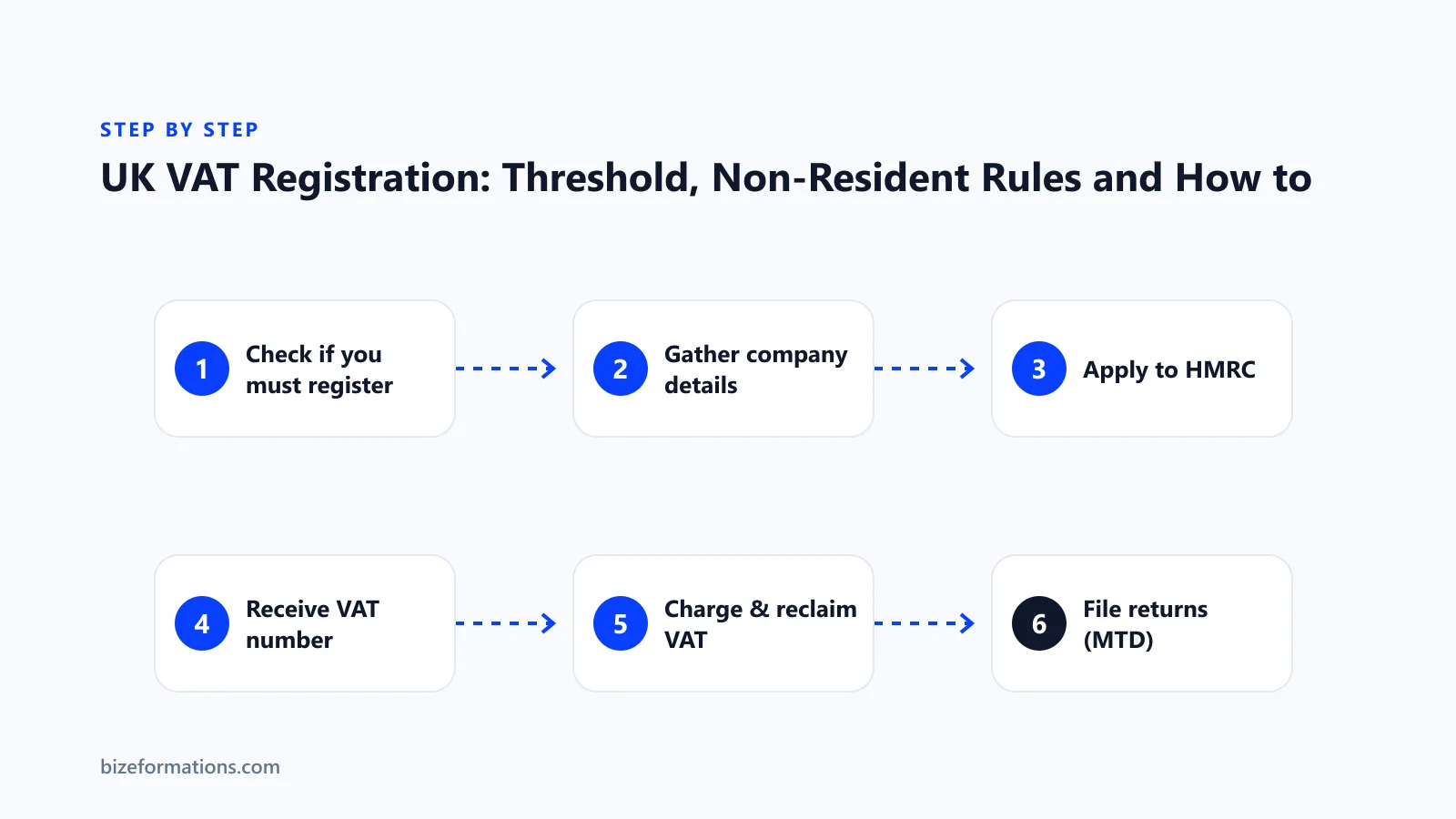
- Check you need to (or want to) register and work out your effective date of registration.
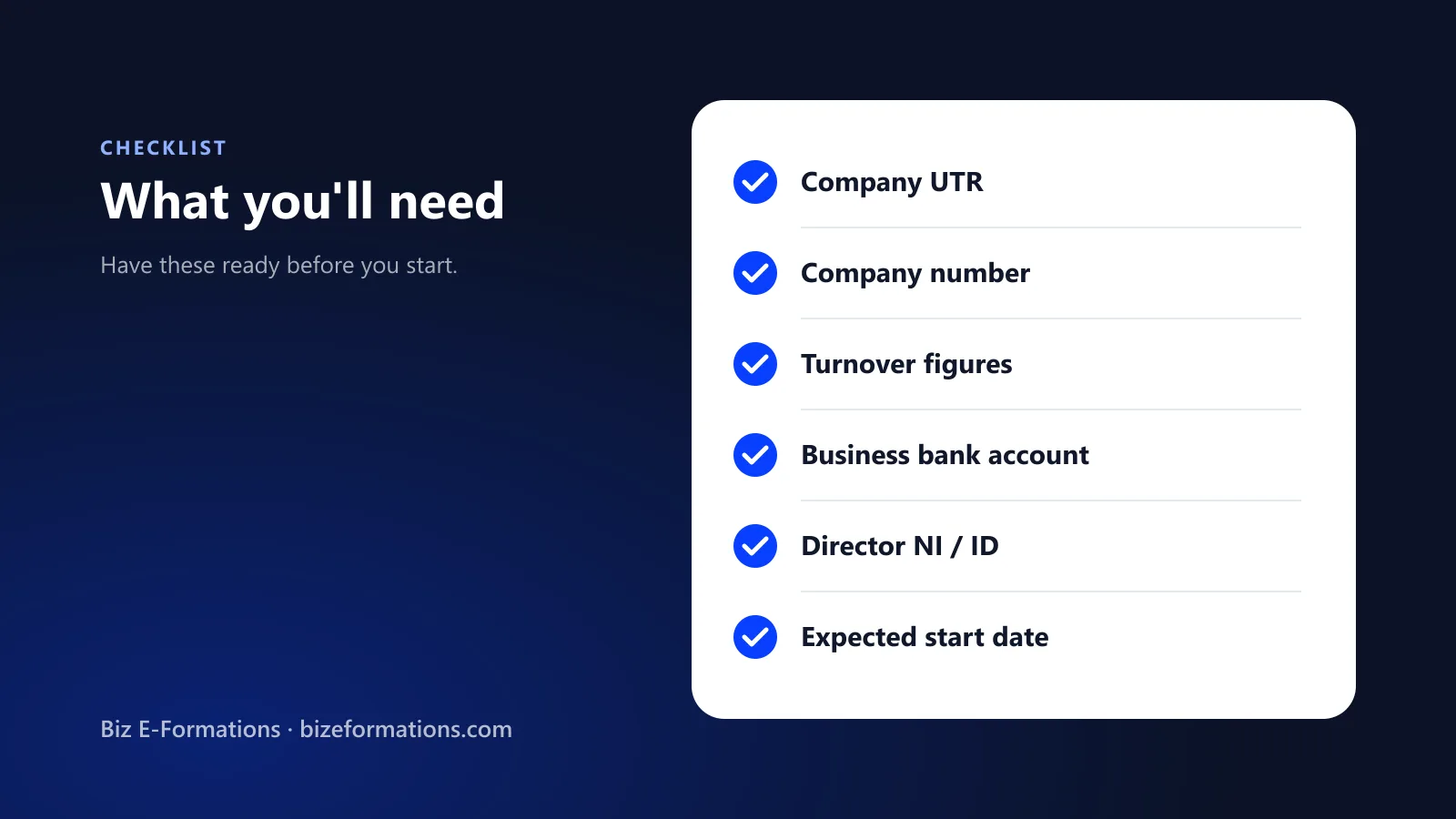
- Gather your details: company number, Unique Taxpayer Reference (UTR), business activity, turnover figures, bank details and director information.
- Apply online through your HMRC business tax account, or by agent.
- Receive your VAT number: HMRC sends a VAT registration certificate. Processing times vary and can be longer for overseas businesses, which may be asked for extra evidence.
After you register
- Charge VAT on taxable sales from your effective date of registration, at the right rate (standard 20%, reduced 5% or zero rate).
- Issue VAT invoices that include your VAT number.
- Keep digital records and file returns using software compatible with Making Tax Digital for VAT.
- File returns and pay on time, usually quarterly, one month and seven days after the end of each period.
Penalties for late registration
If you register late, HMRC will want the VAT you should have charged from the date you should have registered, even if you didn't collect it from customers, plus penalties and interest. That's why it pays to track your rolling 12-month turnover every month.
Common mistakes
- Measuring turnover by calendar or tax year instead of a rolling 12 months.
- Overseas sellers assuming the £90,000 threshold applies to them.
- Forgetting to charge VAT from the effective date while waiting for the certificate.
- Filing returns without MTD-compatible software.
Register with us
Our UK VAT registration service checks whether you need to register, prepares the application and handles HMRC follow-up questions. Forming a new UK company? Start with UK company formation and add VAT in the same order.
